Tell us about the job
Takes about a minute. No obligation.
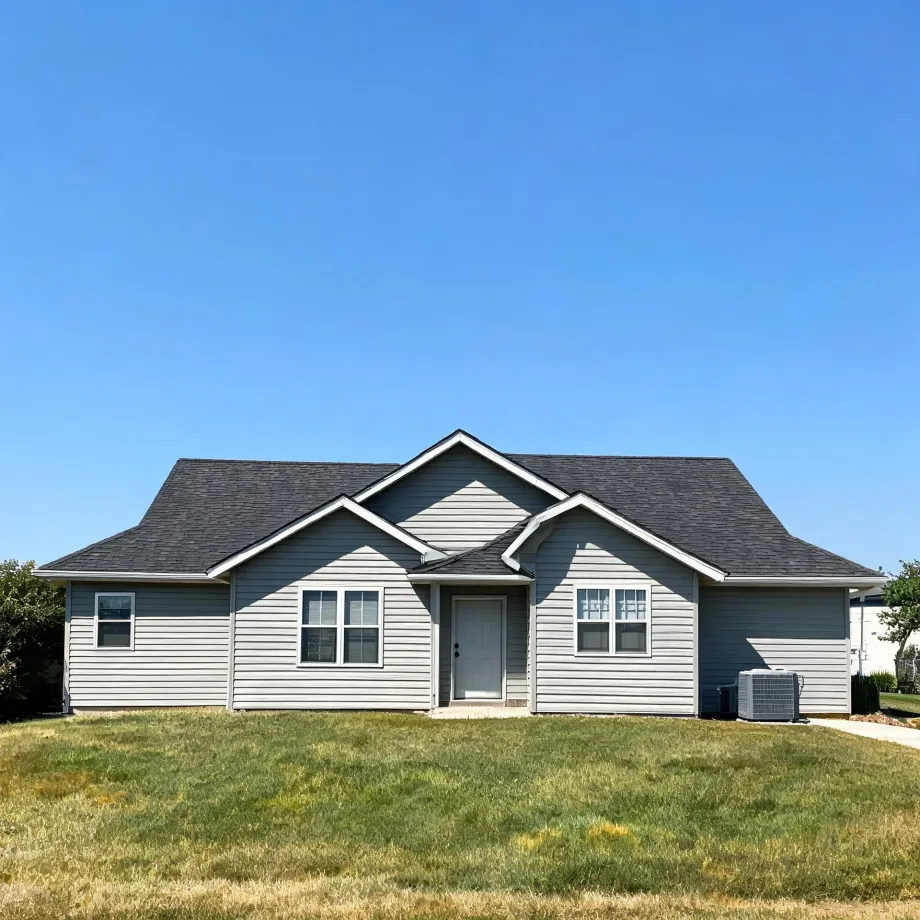
A contractor diagnosing a central AC failure in Linn County has to rule out what did not cause it before they can price the repair. Homes in Linn County, OR have essentially no cooling season — no month of the year is warm enough to call for it. Compressors and contactors that sit unused year after year develop their own failure modes: capacitors lose charge holding capacity, refrigerant circuits develop slow leaks that go undetected, and the first call on a warm day arrives without warning. The fault a contractor finds on that day is rarely fresh.
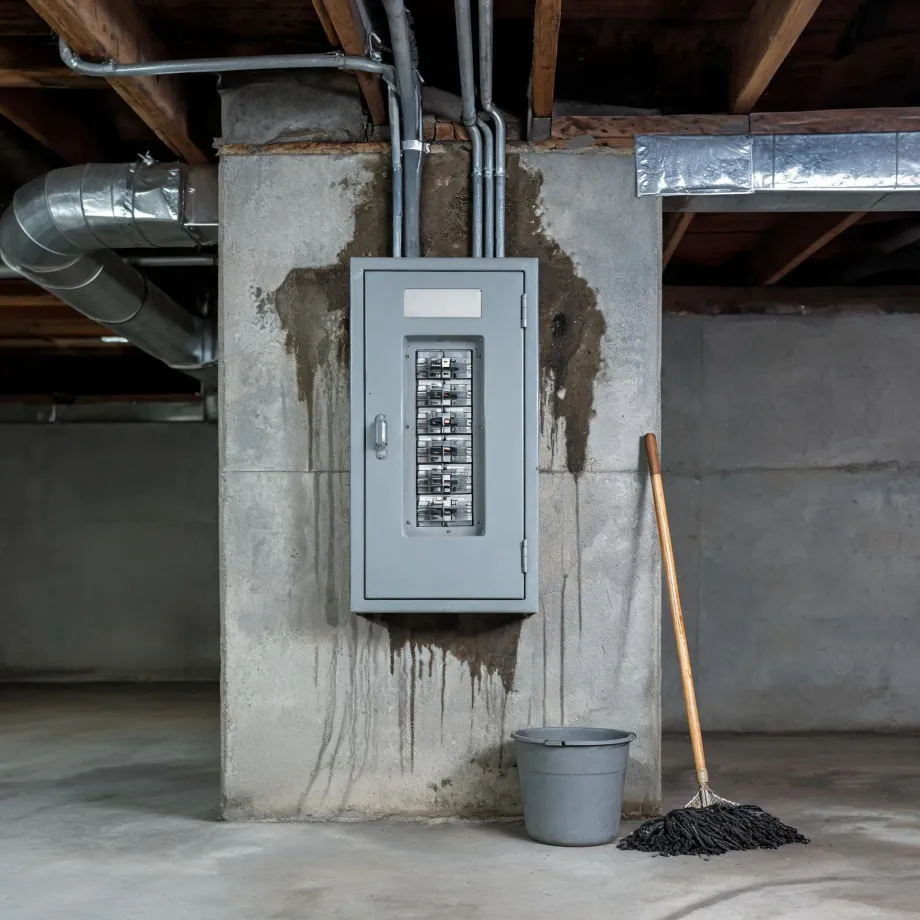
Half the homes in Linn County, Oregon were built in 1978 or earlier (2020-2024 ACS 5-year). That matters for repair work because the housing stock has outlasted the equipment that came with it, and then outlasted the next round too. When a contractor opens a central AC unit here, the question that decides the job is whether the refrigerant fittings, contactors, or control boards it takes are still in production. Some are. Some have been superseded, and sourcing them adds time and changes the bill in ways the age of the house alone would not predict.
The Parts of a Central AC a Contractor Checks First
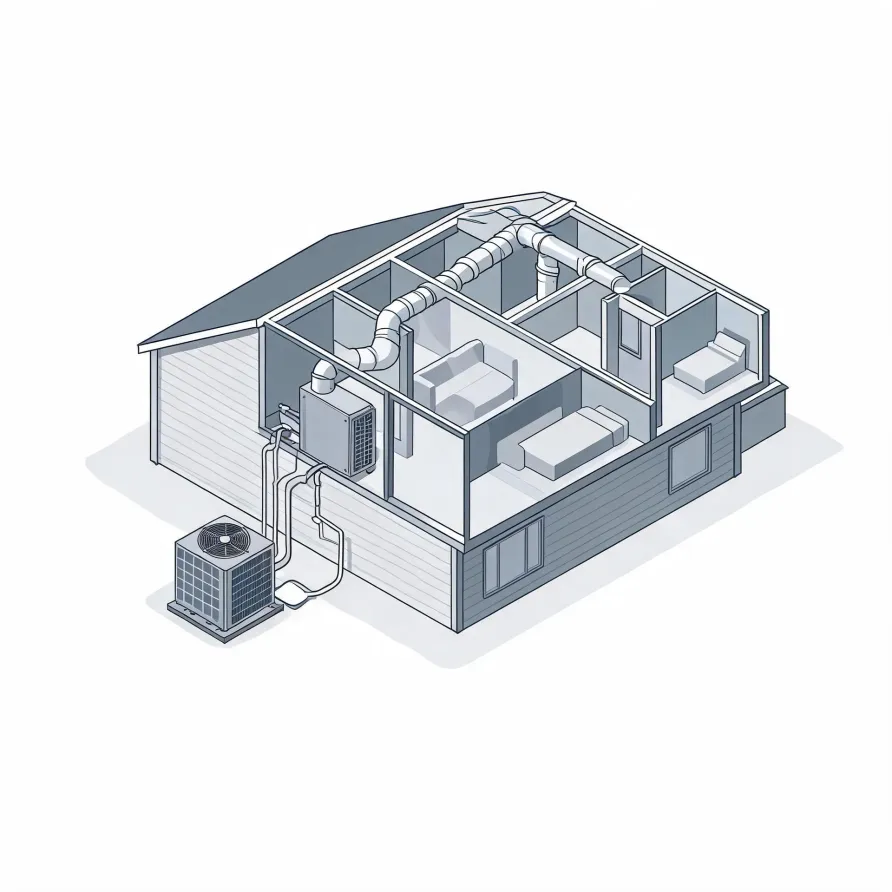
The outdoor condenser unit sits outside the house, usually on a concrete pad beside the foundation, and it holds the compressor and condenser coil. These are the parts a contractor reaches first when the system stops cooling. A failed compressor or a damaged coil are among the most common reasons a central AC quits.
Inside the house, the air handler or furnace cabinet holds the evaporator coil and the blower fan, typically in a utility closet, basement, or attic. A clogged evaporator coil, a weak blower motor, or a refrigerant line running between the two units can each be the source of the problem a contractor is tracing.
The drawing shows the general layout of a central AC system, and a licensed contractor determines exactly which components apply to your house and its setup.
Get matched in Linn CountyLinn County, Oregon, by the numbers
14 severe weather events were recorded in Linn County, Oregon between 2015 and 2024.
NOAA National Centers for Environmental Information, Storm Events Database, bulk CSV export, events 2015-01-01 through 2024-12-31.Half the homes in Linn County, Oregon were built in 1978 or earlier (2020-2024 ACS 5-year).
U.S. Census Bureau, 2020-2024 American Community Survey 5-Year EstimatesLinn County, Oregon holds 53,315 housing units (2020-2024 ACS 5-year).
U.S. Census Bureau, 2020-2024 American Community Survey 5-Year EstimatesOwners occupy 66.9% of the occupied homes in Linn County, Oregon (2020-2024 ACS 5-year).
U.S. Census Bureau, 2020-2024 American Community Survey 5-Year EstimatesRules & Standards Governing Central AC Repair in Linn County, Oregon10 sourced rules and standards
What HVAC Repair Looks Like in Linn County
Split-system central air conditioners rated below 45,000 Btu/h manufactured on or after January 1, 2023 must meet a federal minimum of 13.4 SEER2.
Split-system central air conditioners rated at or above 45,000 Btu/h manufactured on or after January 1, 2023 must meet a federal minimum of 13.4 SEER2.
Split-system central air conditioners manufactured between January 1, 2015 and December 31, 2022 had to meet 13 SEER, the metric that preceded SEER2.
Single-package central air conditioners manufactured on or after January 1, 2023 must meet a federal minimum of 13.4 SEER2.
Space-constrained central air conditioners manufactured on or after January 1, 2023 must meet a federal minimum of 11.7 SEER2.
Federal efficiency standards for split-system central air conditioners and heat pumps are set on each certified combination of outdoor unit and indoor coil rather than on the outdoor unit alone.
Residential and light commercial air conditioning and heat pump systems assembled in the field, including mini-splits and unitary systems, may not be installed on or after January 1, 2025 using a refrigerant with a global warming potential above 700.
A field-assembled system whose specified components were all manufactured or imported before January 1, 2025 carries no installation compliance date under the refrigerant restrictions and may still be installed.
Licensing and Legal Requirements in Linn County, Oregon
Oregon’s contractor licence does not reach casual, minor or inconsequential work on one structure where the person’s contracts total less than $1,000 — and the exemption is unavailable to anyone who advertises or signs themselves as a contractor, at any price.
Oregon requires a current Construction Contractors Board licence, with the right endorsement, to undertake, offer to undertake or bid construction work.