Tell us about the job
Takes about a minute. No obligation.
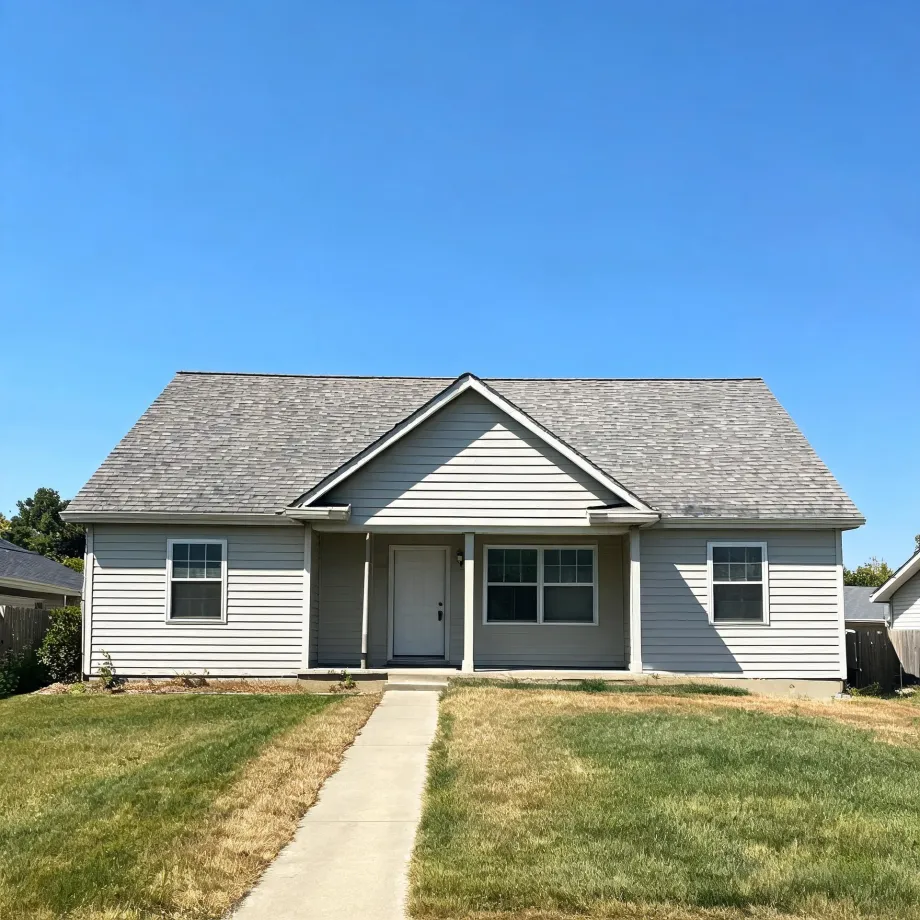
A contractor quoting an AC repair here has to settle one question before anything else: whether the system has ever run long enough to wear. Homes in Crook County, OR have essentially no cooling season — no month of the year is warm enough to call for it. A compressor that has sat idle season after season is not accumulating cycle fatigue on its valves or its contactor points. What it is accumulating is corrosion, dried lubricant, and capacitor degradation from long disuse. When a unit finally fails on the first genuinely warm day, the failure trace points to storage conditions rather than runtime, and the repair scope follows from that.
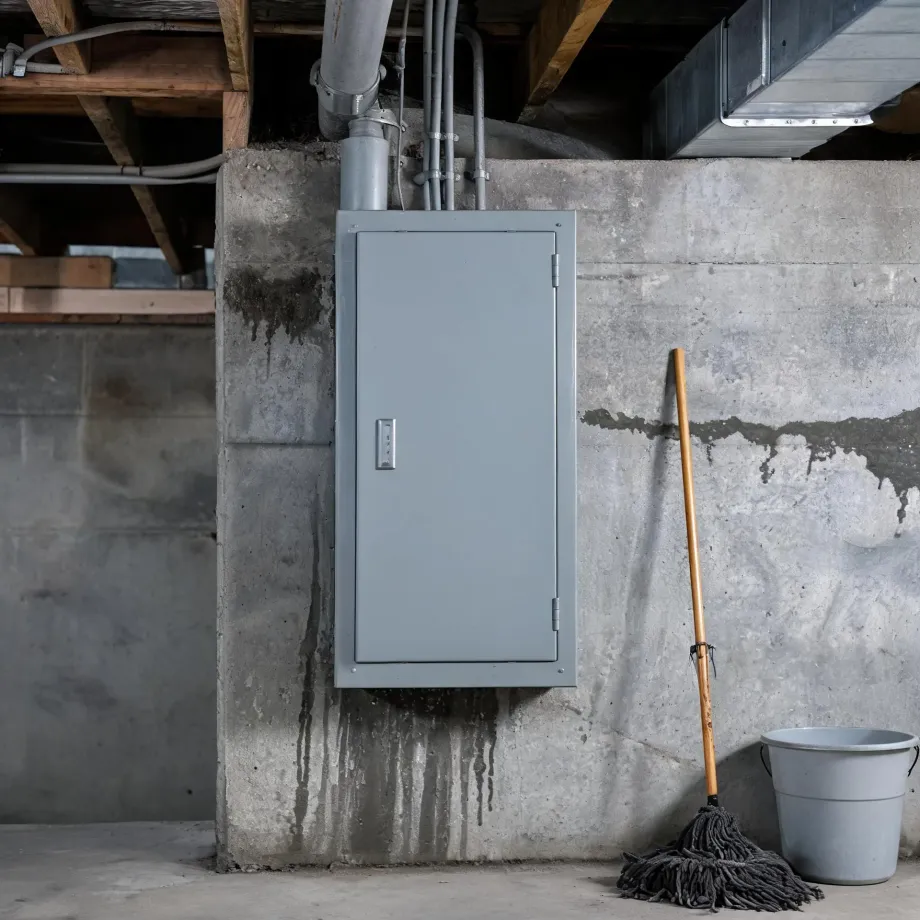
Parts availability is where many central AC repairs in Crook County get complicated. Half the homes in Crook County, Oregon were built in 1996 or earlier (2020-2024 ACS 5-year). A system running in a house that age has often been replaced or patched at least once, but the unit a contractor opens today may still take components that run on short supply or special order. That gap between what the manufacturer now supports and what the equipment actually needs is what drives repair costs up and turnaround times out. A contractor has to identify the model, confirm part availability, and price accordingly before any other decision makes sense.
The Parts of a Central AC a Contractor Checks First
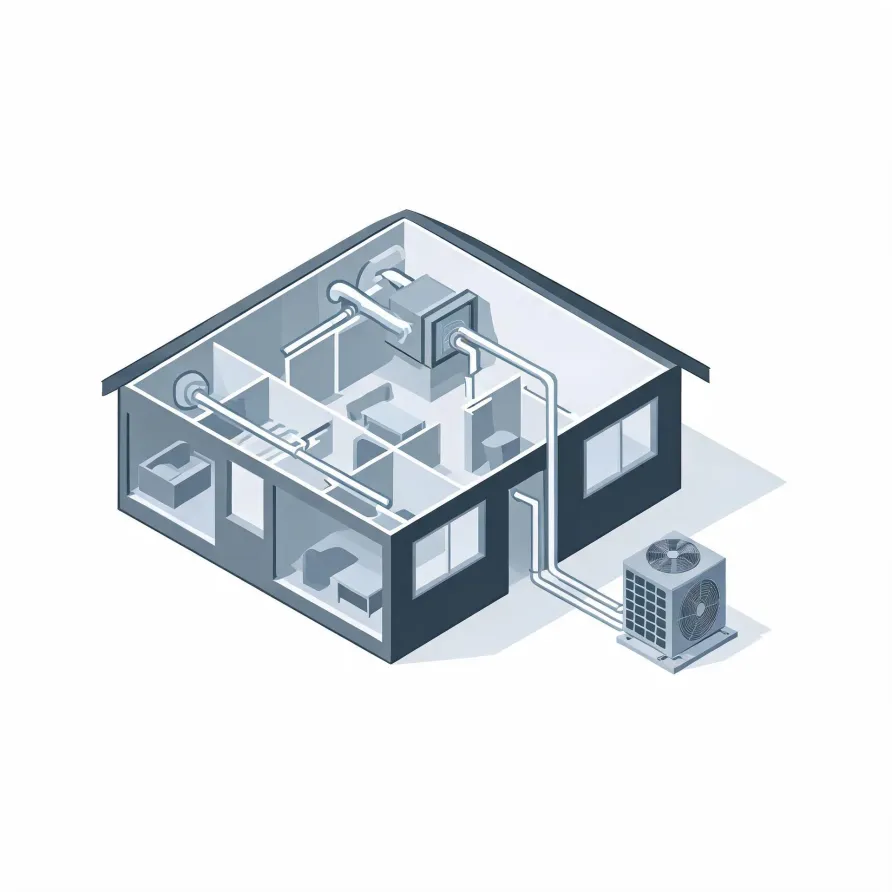
The outdoor condenser unit sits outside the house, usually on a concrete pad along an exterior wall, and it is where the system sheds heat to the outside air. The indoor air handler or furnace sits inside, often in a utility closet, basement, or attic, and it moves air across the evaporator coil. When either of those is the source of the problem, a contractor will know it quickly.
The evaporator coil lives inside the air handler and is the first place a contractor looks when the system runs but the house stays warm. The refrigerant lines run between the two main units, and the thermostat on the wall tells the whole system when to run. Faults in the refrigerant lines or a miscommunicating thermostat account for a real share of repair calls.
The drawing shows a typical layout, and a licensed contractor determines what applies to your specific house and equipment.
Get matched in Crook CountyCrook County, by the numbers
64 severe weather events were recorded in Crook County, Oregon between 2015 and 2024.
NOAA National Centers for Environmental Information, Storm Events Database, bulk CSV export, events 2015-01-01 through 2024-12-31.Half the homes in Crook County, Oregon were built in 1996 or earlier (2020-2024 ACS 5-year).
U.S. Census Bureau, 2020-2024 American Community Survey 5-Year EstimatesCrook County, Oregon holds 11,800 housing units (2020-2024 ACS 5-year).
U.S. Census Bureau, 2020-2024 American Community Survey 5-Year EstimatesOwners occupy 74.1% of the occupied homes in Crook County, Oregon (2020-2024 ACS 5-year).
U.S. Census Bureau, 2020-2024 American Community Survey 5-Year EstimatesCodes & Standards Governing Central AC Repair in Crook County, Oregon10 sourced rules and standards
What the repair visit looks like
Split-system central air conditioners rated below 45,000 Btu/h manufactured on or after January 1, 2023 must meet a federal minimum of 13.4 SEER2.
Split-system central air conditioners rated at or above 45,000 Btu/h manufactured on or after January 1, 2023 must meet a federal minimum of 13.4 SEER2.
Split-system central air conditioners manufactured between January 1, 2015 and December 31, 2022 had to meet 13 SEER, the metric that preceded SEER2.
Single-package central air conditioners manufactured on or after January 1, 2023 must meet a federal minimum of 13.4 SEER2.
Space-constrained central air conditioners manufactured on or after January 1, 2023 must meet a federal minimum of 11.7 SEER2.
Federal efficiency standards for split-system central air conditioners and heat pumps are set on each certified combination of outdoor unit and indoor coil rather than on the outdoor unit alone.
Residential and light commercial air conditioning and heat pump systems assembled in the field, including mini-splits and unitary systems, may not be installed on or after January 1, 2025 using a refrigerant with a global warming potential above 700.
A field-assembled system whose specified components were all manufactured or imported before January 1, 2025 carries no installation compliance date under the refrigerant restrictions and may still be installed.
Licensing Rules for HVAC Work in Crook County, Oregon
Oregon’s contractor licence does not reach casual, minor or inconsequential work on one structure where the person’s contracts total less than $1,000 — and the exemption is unavailable to anyone who advertises or signs themselves as a contractor, at any price.
Oregon requires a current Construction Contractors Board licence, with the right endorsement, to undertake, offer to undertake or bid construction work.
Severe Weather Events in Crook County
Extreme weather puts real stress on central AC systems, and how hard a unit works over its life is shaped by the conditions it runs in. Repair needs in Crook County are a local question partly because the weather here is a local fact.
64 severe weather events, 2015–2024. Source: NOAA National Centers for Environmental Information, Storm Events Database.